What Size Artwork Should Go Above a King Bed?

The Short Answer
For a standard 76-inch-wide king bed, use these as a starting point:
Single artwork: 48–60 in. wide
Statement single artwork: 54–72 in. wide
Two-piece set: 50–64 in. total width
Three-piece set: 54–66 in. total width
Two vertical pieces: 48–60 in. total width
These are guidelines, not fixed rules. The best size will also depend on the width of the headboard, ceiling height, available wall space, and the furniture surrounding the bed.
Choosing artwork above a king bed is mostly a matter of proportion. Because a king bed is already visually substantial, artwork that feels large on its own can suddenly look too small once it is placed above 76 inches of mattress, a headboard, nightstands and the surrounding wall.
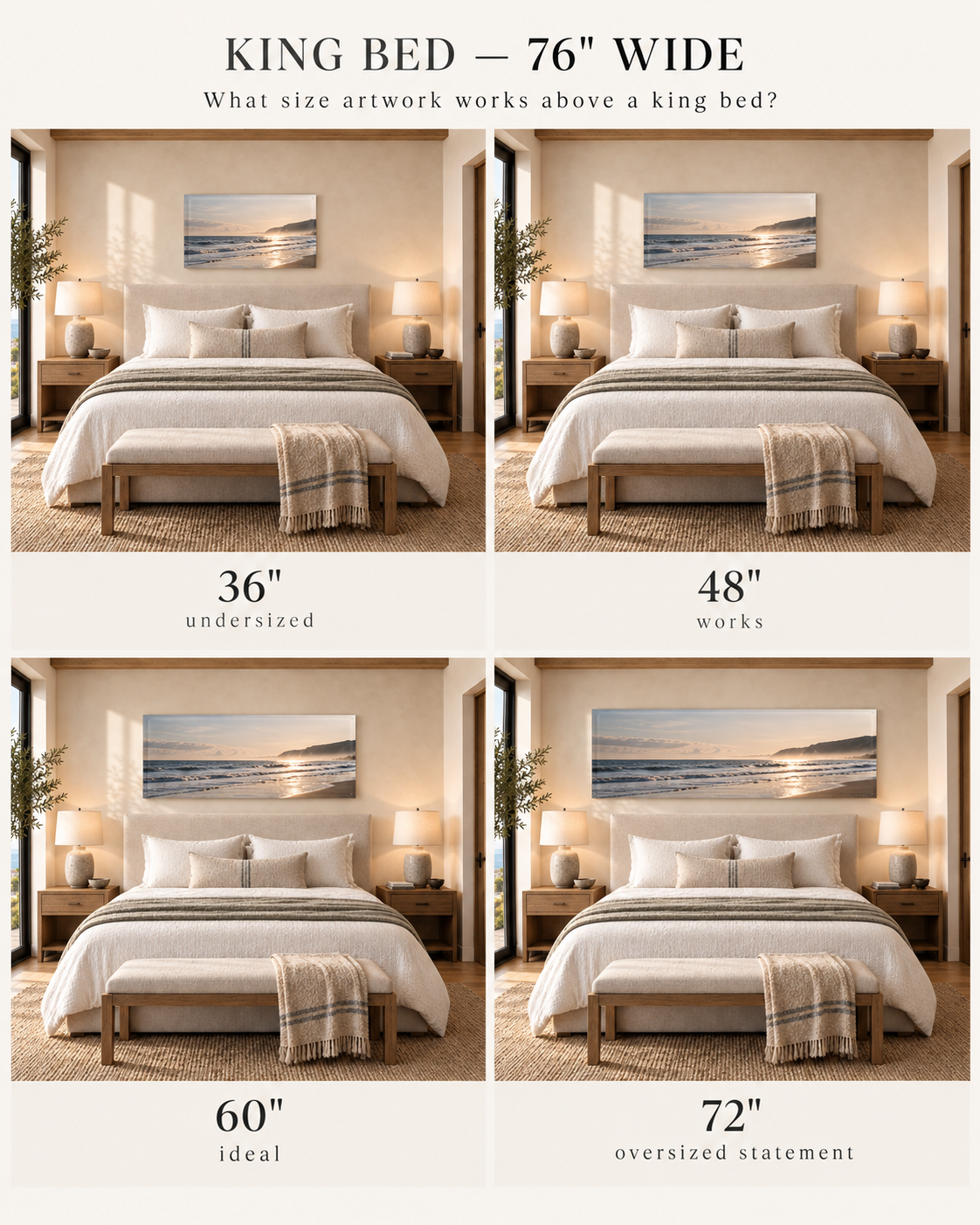
As a general starting point, artwork above a king bed should measure about 50–65 inches wide overall. For a single statement piece, 54–60 inches wide is an especially dependable range.
The goal is not to fill every inch of wall space above the bed. It is to give the artwork enough visual weight that it feels connected to the bed rather than floating above it.
Start With the Width of the Bed
A useful interior-design guideline is for artwork to span roughly two-thirds to three-quarters of the width of the furniture beneath it. For a standard 76-inch king mattress, that usually means an overall artwork width of about 50–57 inches.
The important part is to consider the visual width of the bed, not just the mattress itself. A wide upholstered headboard, substantial nightstands or a large uninterrupted wall can all make a piece feel smaller once it is installed.
For example, if the headboard measures 84 inches wide, a 36-inch artwork will usually feel much more undersized than it did on its own. In rooms with larger headboards or more wall space, moving into the 60-inch range often creates a stronger, more intentional proportion.
Why Artwork Often Looks Too Small Above a King Bed
One of the most common bedroom design mistakes is choosing artwork based on how large it seems while shopping.
A 24 × 36-inch photograph is not a small piece of art.
But place a 36-inch-wide photograph above a 76-inch king bed and it occupies less than half the width of the mattress. Add an 80-inch headboard and two nightstands, and the artwork can begin to feel disconnected from everything beneath it.
When choosing between two sizes for a king bedroom, the larger option is often the better choice—especially when the artwork is the primary feature on the wall.
How High Should Artwork Hang Above a King Bed?
Size is only half of the equation. Placement matters just as much.
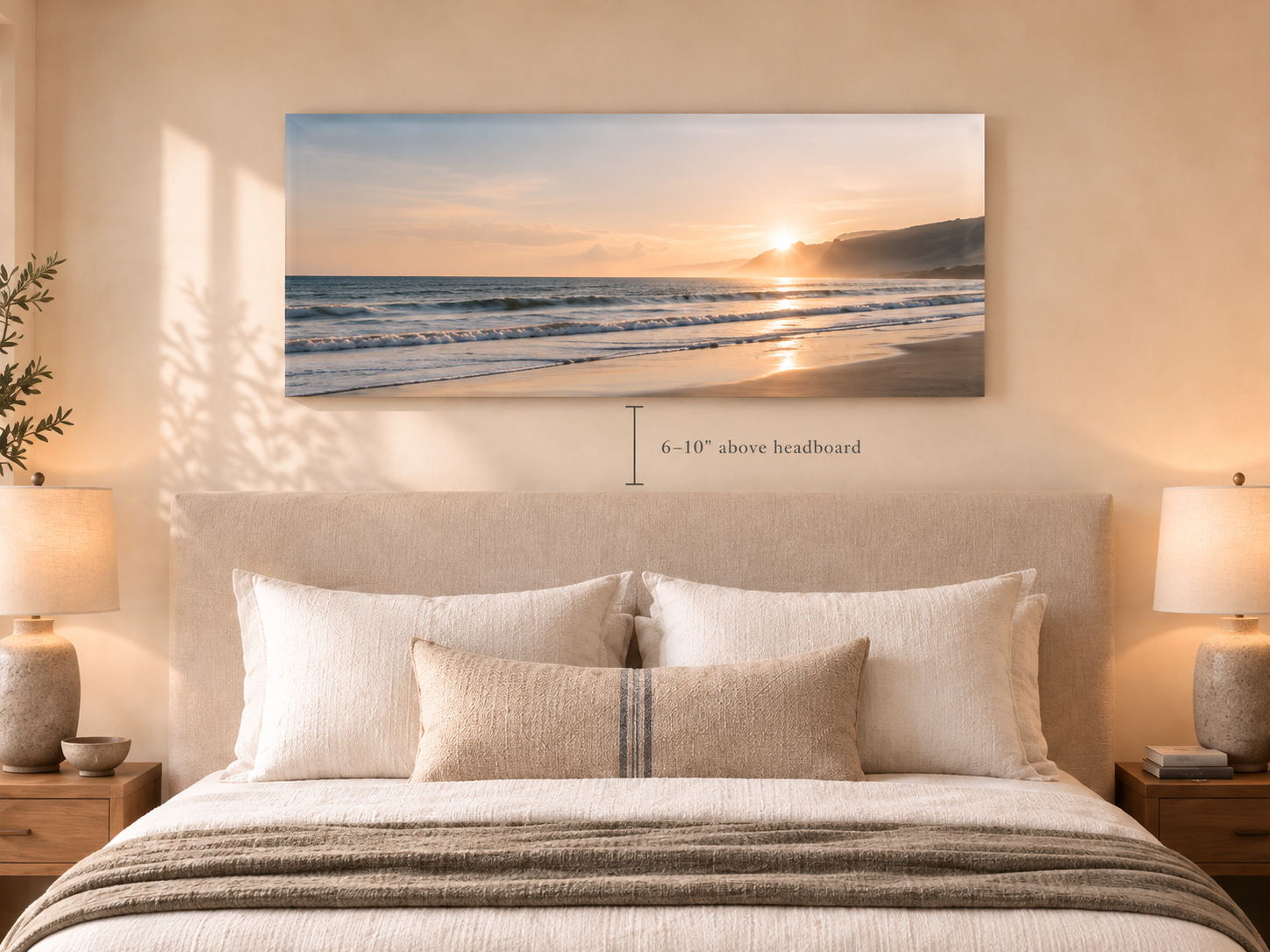
As a general starting point, the bottom of the artwork should sit about 6–10 inches above the top of the headboard. That keeps the artwork visually connected to the bed without making the wall feel crowded.
If the gap is too large, the artwork can start to feel like it is floating separately from the furniture below. If it is too tight, the arrangement can feel compressed.
You also do not need to center the artwork vertically between the headboard and the ceiling. The artwork should relate first to the bed, not to the entire wall.
Think of the bed, headboard and artwork as one composition.
Consider the Height of the Artwork Too
Once the width feels right, look at how much vertical wall space is available above the headboard. A long horizontal piece is often the easiest shape to work with above a king bed because it naturally follows the proportions of the furniture below.
As a general starting point, artwork around 20–30 inches tall works well above many standard headboards. In rooms with higher ceilings or larger uninterrupted walls, 30–40 inches tall can create more presence and help the artwork feel appropriately scaled.
Taller pieces can still work, but make sure there is enough room between the headboard and ceiling for the artwork to breathe. The goal is for the piece to feel substantial without making the wall feel crowded.
Single Artwork vs. Art Sets
A single large-format artwork creates one strong focal point and works especially well above simple upholstered, wood or platform beds. For a king bed, a horizontal piece around 54–60 inches wide is a reliable starting point, with larger pieces working particularly well in rooms with high ceilings, wider headboards or more uninterrupted wall space.
Art sets offer a little more flexibility. Two or three pieces can create the same visual weight without requiring one very large print. What matters most is the overall width of the arrangement, including the spacing between each piece.
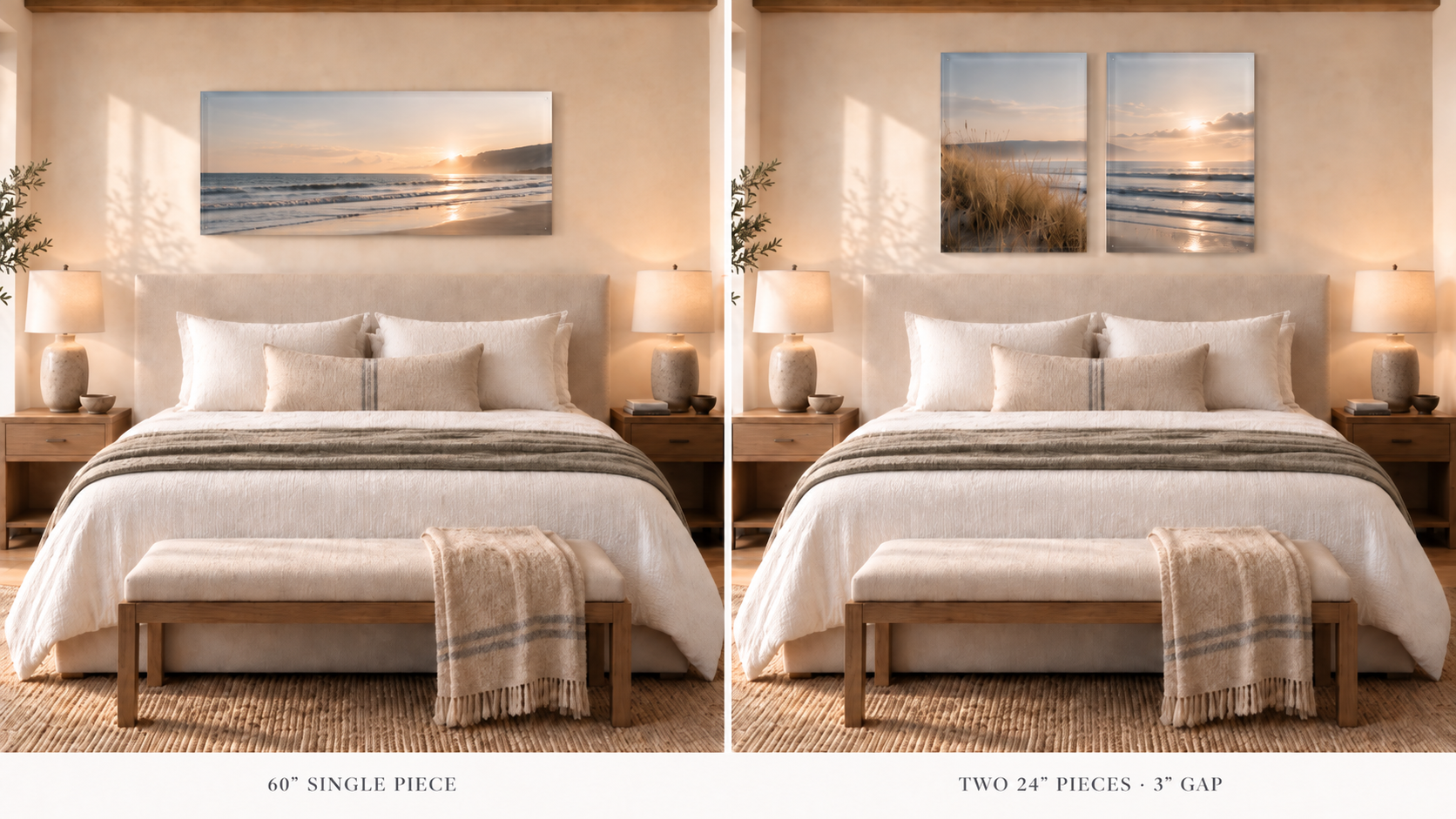
For example, two 24-inch-wide photographs with a 3-inch gap between them create a total composition of about 51 inches. That proportion works well above many king beds while still giving the individual pieces enough room to breathe.
What About Two Vertical Pieces?
Two Vertical Pieces Above a King Bed
Two vertical photographs can work especially well above a king bed when you want to introduce a little more height while still keeping the arrangement balanced.
Keep the spacing between the pieces relatively tight—usually around 2–4 inches—so they read as one composition rather than two separate artworks.
For example, two pieces measuring about 24 inches wide each with a 3-inch gap create an overall installation of roughly 51 inches wide. That gives the arrangement enough visual presence for a king bed without filling the entire wall.
Don’t Size the Artwork to the Entire Wall
This is an easy mistake to make in a large bedroom. If the bed sits on a 14-foot wall, it can be tempting to choose artwork based on the dimensions of the wall itself.
Instead, start with the bed. The bed is the anchor, and the artwork should reinforce it. Nightstands, lamps, windows, sconces and the surrounding negative space will take care of the rest of the wall.
The goal is not to fill the wall. It is to create a composition that feels balanced around the bed.
For Vacation Rentals, Err Slightly Larger
Vacation-rental bedrooms have one additional consideration: they are often experienced first through photographs.
Artwork that feels appropriately sized while standing in the room can disappear once the bedroom is photographed with a wider lens. Choosing a slightly larger piece can help create a stronger focal point, make a simple room feel more finished and reduce the large blank-wall effect that is common in rental bedrooms.
This does not mean every king bedroom needs oversized artwork. It simply means avoiding the instinct to play it too safe.
One appropriately scaled piece is often more effective than several smaller decorative objects competing for attention.
A Simple Formula
If you’re standing in a bedroom trying to choose the right size, start with the headboard.
Measure the width of the headboard and multiply it by approximately 0.65–0.75.
For example, an 80-inch headboard points toward artwork roughly 52–60 inches wide.
From there, adjust slightly based on the room itself. Choose toward the larger end if the space has high ceilings, a wide blank wall, minimal furnishings or if the artwork needs to make a stronger impact in listing photography.
Choose toward the smaller end if the bed is already surrounded by strong visual elements such as sconces, canopy architecture, substantial bedside lighting or other features that add weight to the composition.
The Takeaway
For most king bedrooms, approximately 50–65 inches of total artwork width is a reliable range.
More important than the exact measurement is how the artwork relates to the bed beneath it. It should feel substantial enough to belong to the overall composition without overwhelming the headboard or surrounding wall.
When in doubt, mock up the size before ordering. Painter’s tape, paper templates or a quick digital mockup can help you see the proportions in the room, and even a few inches can make a surprising difference once the artwork is viewed at full scale.