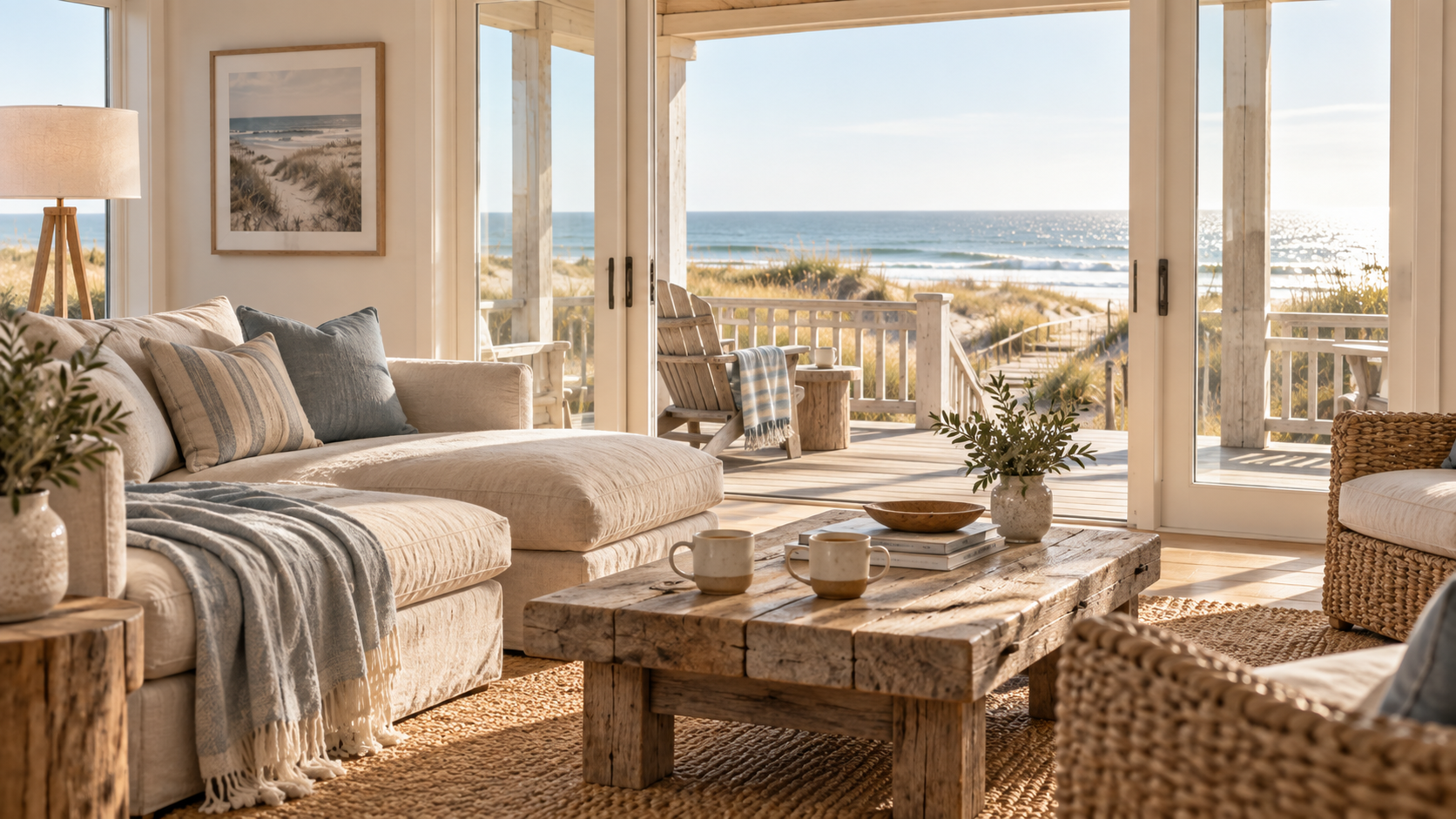
The Guest Welcome That Sets the Tone
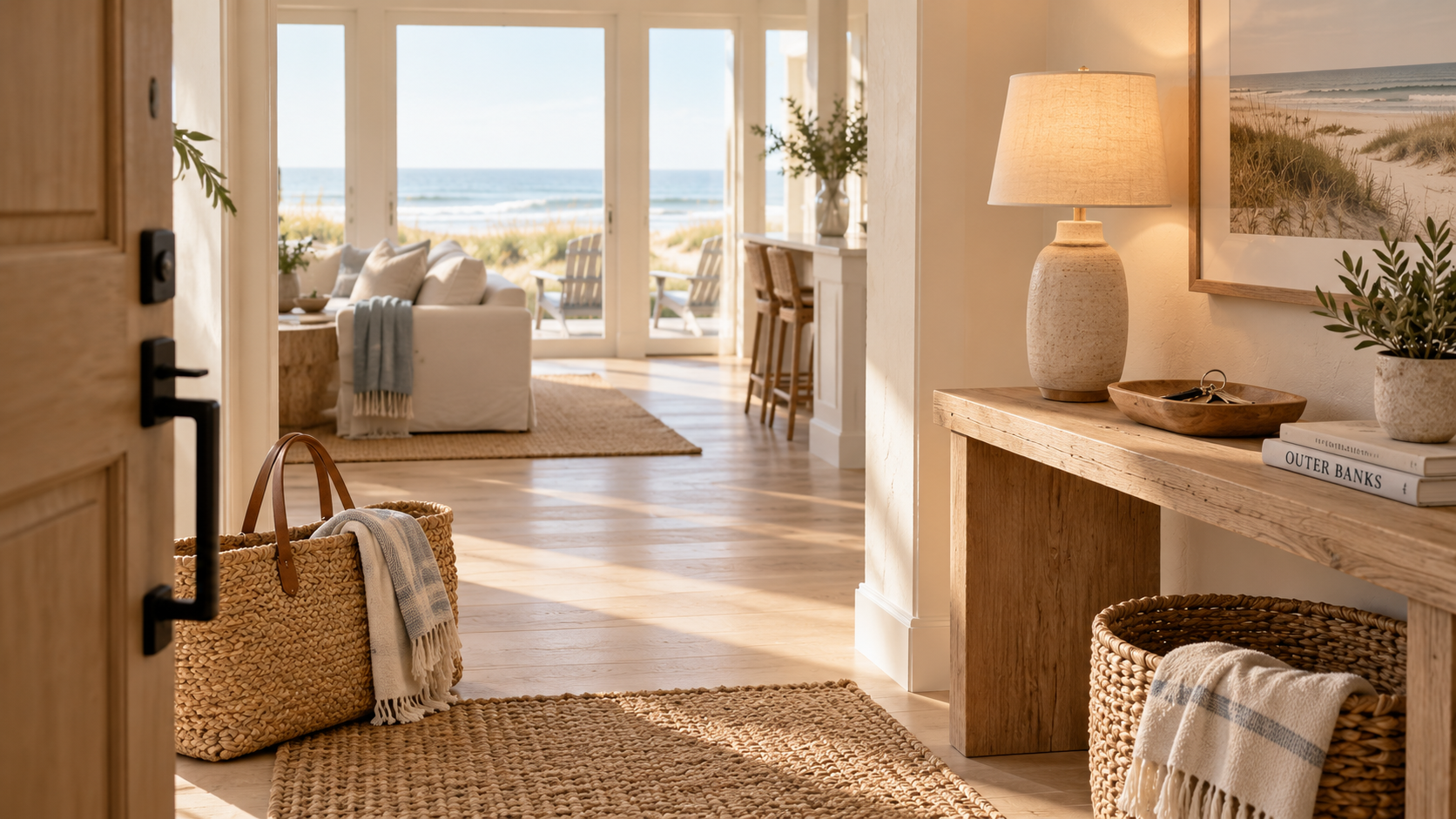
Thoughtful touches that help guests feel considered from the moment they arrive.
A guest starts forming an opinion of a stay before they’ve unpacked a bag.
It happens when they find the house without circling the block. When the porch light is already on. When the temperature inside feels right. When there’s somewhere obvious to set their keys, the WiFi information is easy to find, and the bathroom looks prepared rather than simply cleaned.
None of these things are particularly extravagant.
Together, they tell a guest something much more important:
Someone thought about what it would feel like to arrive here.
And that is really what a good welcome is.
Start With the Arrival, Not the Welcome Basket
It’s easy to think of “guest experience” as the extras — wine, snacks, branded gifts or something waiting on the kitchen counter.
Those things can be great.
But they come after the basics.
The strongest arrival experience begins by removing the small moments of friction that make an unfamiliar house feel unfamiliar.
A guest who has been driving for six hours doesn’t want to circle the property looking for the correct entrance, struggle with a lockbox or scroll through an old message thread to find the WiFi password.
Before adding anything decorative, make the first ten minutes effortless.
Make sure the house number is easy to see. Parking instructions are clear. The entry is well lit after dark. The lock or keypad is simple to operate. The house is already at a comfortable temperature.
And once guests walk through the door, the information they’ll need first should be easy to find.
You’re not trying to impress them yet.
You’re letting them exhale.
Make the Essentials Feel Intentional
Some of the most effective guest touches are things you already need to provide.
Hand soap. Towels. Coffee. Shampoo. Drinking glasses. Extra toilet paper.
Presentation changes how those things are perceived.
Three matching bottles arranged on a small tray feel different from a collection of containers gathered under the sink.
Fresh towels folded together feel different from towels spread between shelves.
A simple coffee setup feels more considered when everything a guest needs is already in one place.
It doesn’t have to be expensive.
Consistency does much of the work.
Choose a few materials, finishes and colors that belong to the house and repeat them. A wood tray. Amber bottles. White towels. Simple typography. A ceramic dish near the door.
The goal isn’t to make the property feel like a hotel.
It’s to make it feel finished.
Give Guests What They Need Before They Have to Ask
A good host answers questions quickly.
A good guest experience prevents many of those questions from happening in the first place.
Think through the stay room by room.
In the bathroom, is there somewhere to hang a wet towel?
Near the entry, is there somewhere natural to put shoes or bags?
At the coffee maker, could a half-awake guest figure everything out without opening five cabinets?
If the television, hot tub, grill or firepit needs instructions, can guests find them without messaging you?
And perhaps most importantly: can they find the WiFi password in about five seconds?
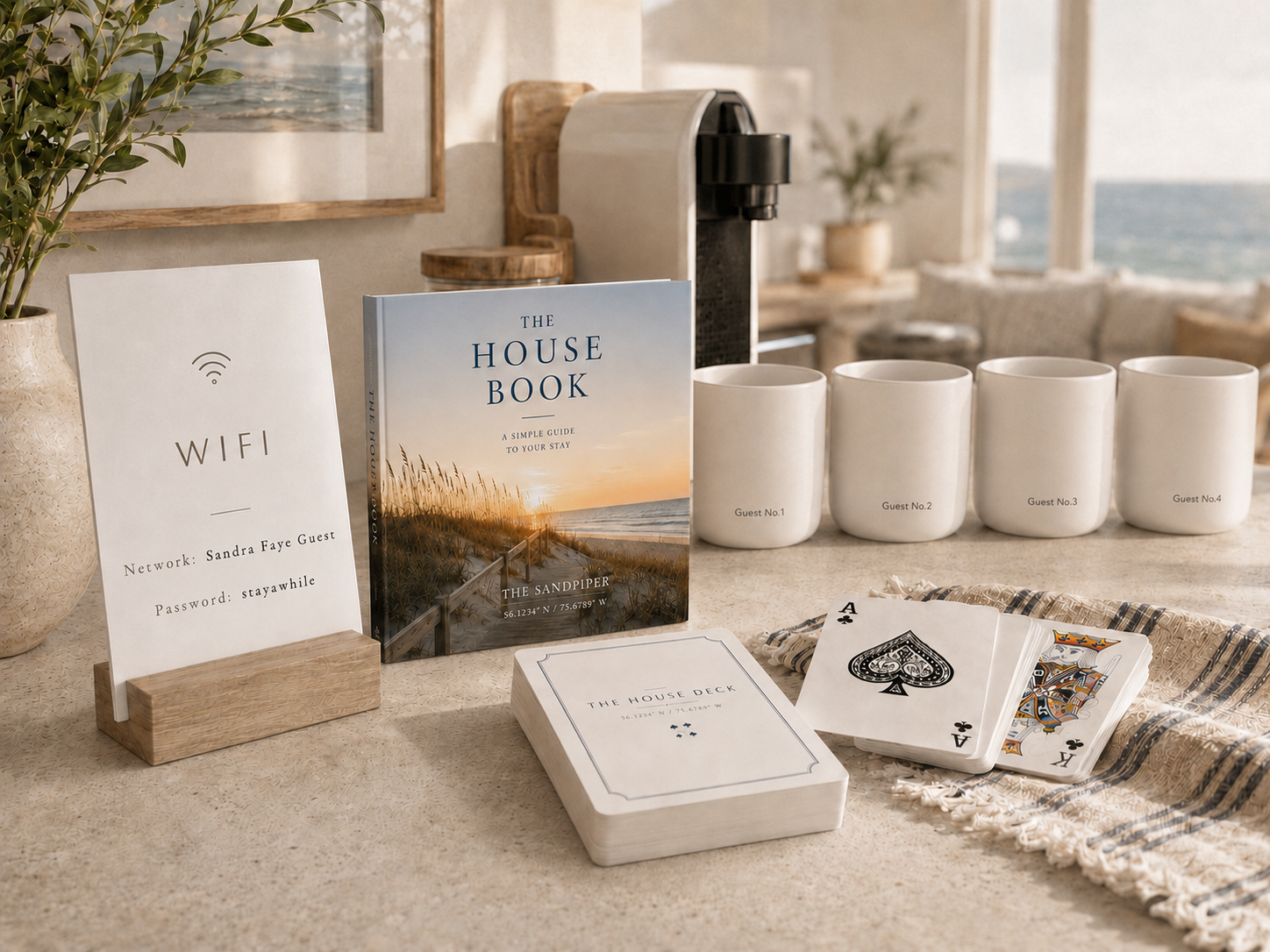
This is where a well-designed House Book and Guest Details earn their place.
A house guide shouldn’t feel like homework or a binder full of rules. It should make the important information easy to scan while helping guests understand how to enjoy the house and the destination.
Think less instruction manual.
More field guide to the stay.
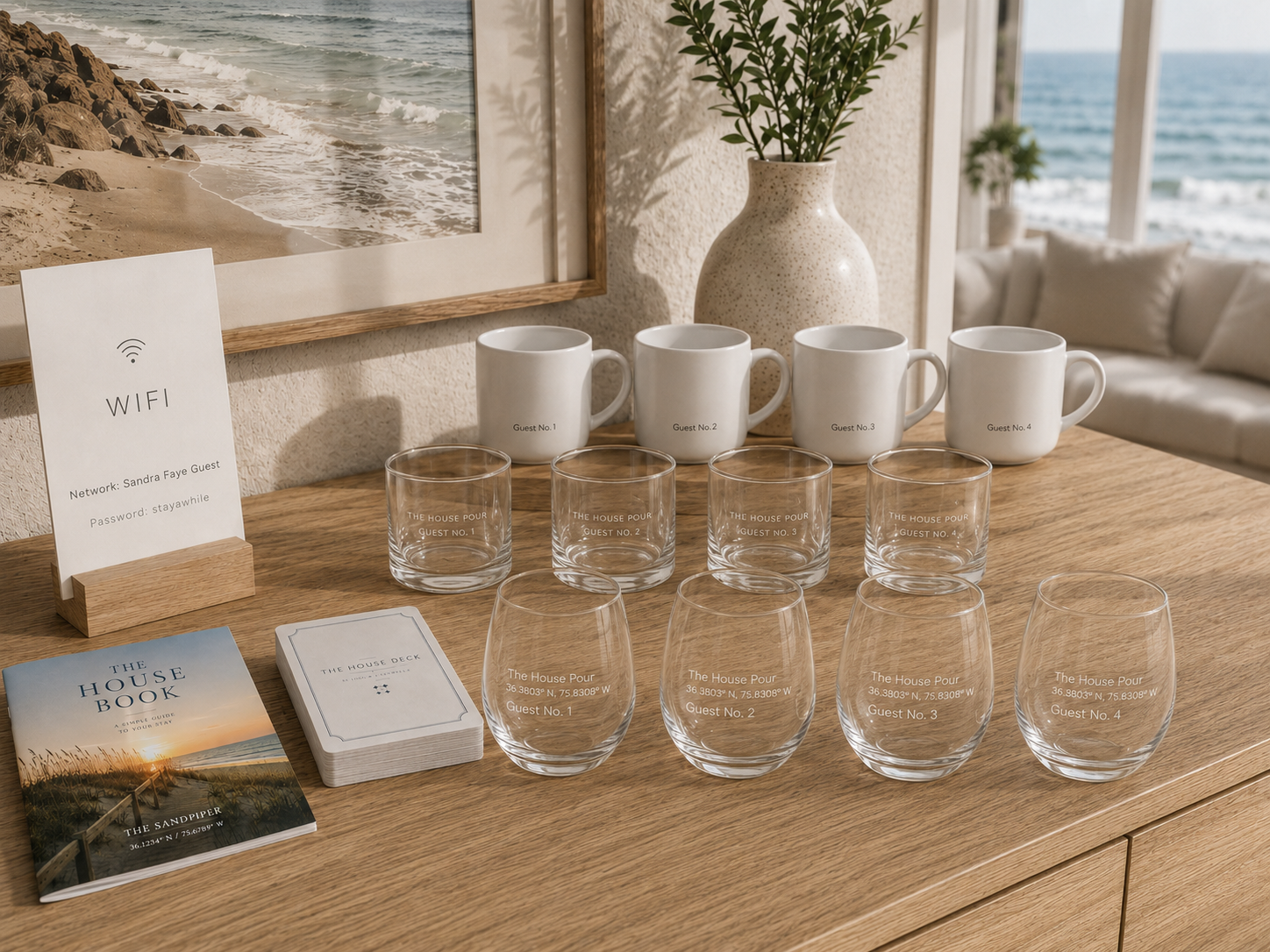
This is the thinking behind West of Here Stay Sets: coordinated guest-ready details brought together around the way people actually use a vacation home.
Rather than sourcing every piece individually, hosts can choose the level of welcome that makes sense for their property and build from there.
The point isn’t to put a logo on everything.
It’s to make the different parts of the stay feel like they belong to the same house.
Thoughtful Doesn’t Have to Mean Complicated
Creating a more considered stay doesn’t require filling the house with more things.
Often, it’s the opposite.
A small number of useful pieces, chosen well and designed to work together, can do far more than a countertop crowded with miscellaneous guest gifts.
A House Book gives guests one place for the information they actually need.
A WiFi display eliminates one of the most common arrival questions.
Mugs and glassware make the kitchen feel prepared.
A deck of cards gives people something to reach for after dinner.
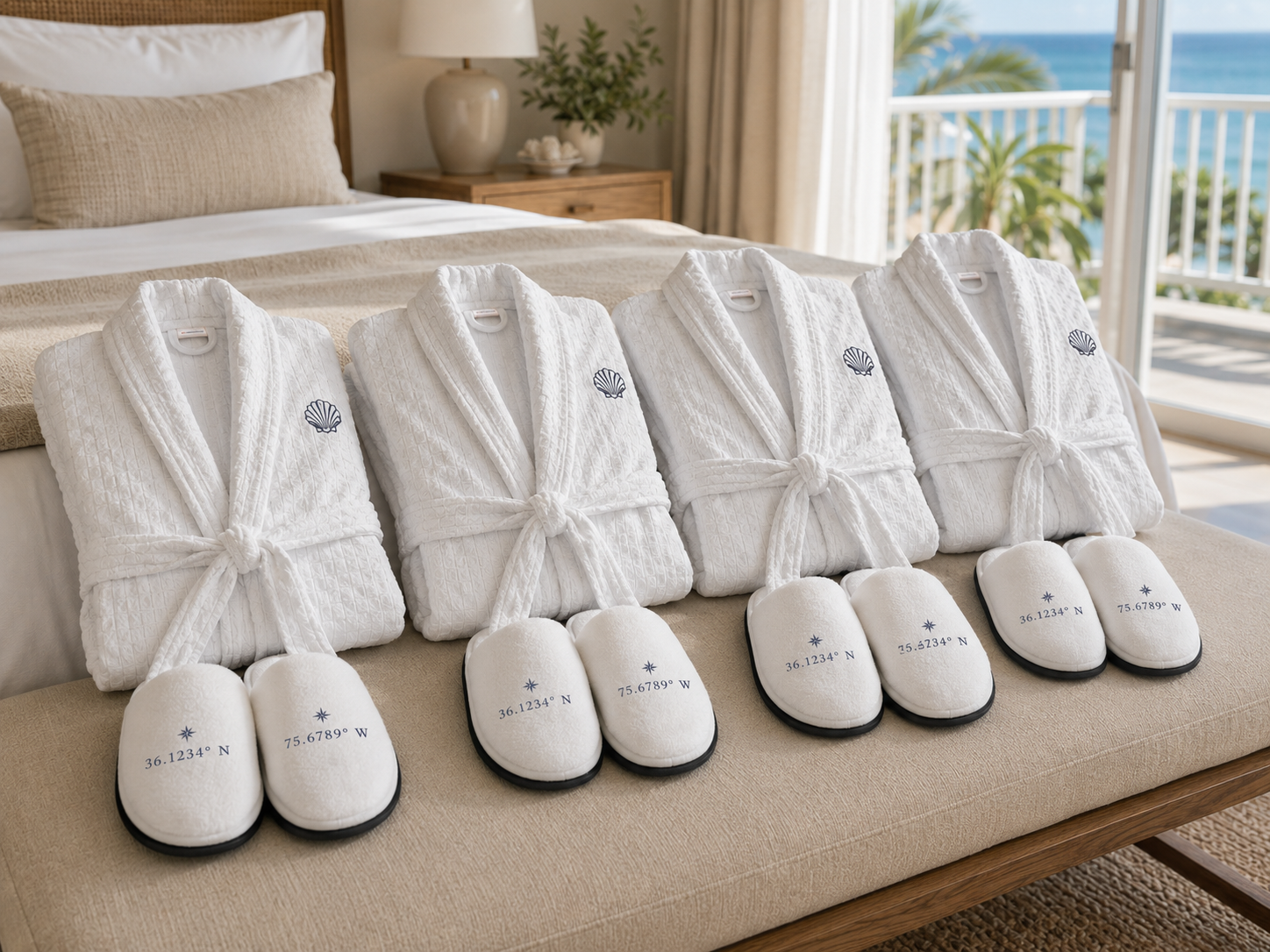
Guest slippers or robes can make an otherwise ordinary morning feel a little more special.
For families, a puzzle, activity book or small guest keepsake can create an entirely different kind of welcome.
Think About Who Is Actually Staying There
A great guest welcome isn’t necessarily the same for every property.
A couples’ retreat and a six-bedroom family beach house have completely different needs.
If families make up a large portion of your bookings, think about the moments when younger guests are waiting for dinner, winding down after the beach or stuck inside during an afternoon storm.
A simple activity book, puzzle or something they can take home gives parents an easy win — and gives the children something connected to the trip itself.
Likewise, a property designed for couples may benefit more from good glassware, comfortable robes, coffee for two or a deck of cards left within reach.
The best guest details aren’t simply attractive.
They make sense for the people staying there.
Add Something That Belongs to the Place
One specific detail often feels more memorable than ten generic ones.
At a beach house, that might be a guide to the closest beach access or towels already waiting near the outdoor shower.
At a mountain cabin, it might be firewood stacked beside the fireplace.
At a lake house, it could be a note pointing guests toward the best place to have morning coffee.
Even the smaller pieces inside the home can reinforce that sense of place.
A House Book built around the destination. Artwork that actually comes from the surrounding landscape. A children’s activity book about the coast. A puzzle guests recognize as somewhere they visited that afternoon.
These details help a property feel connected to where it is rather than like the same rental could have been dropped into any destination in the country.
And that connection matters.
Guests may book a house.
But what they’re really traveling for is the place.
Let the House Do Some of the Welcoming
Not every thoughtful gesture needs a label explaining that it is thoughtful.
Turn on a lamp before an evening arrival.
Leave the curtains open toward the best view.
Clear unnecessary clutter from the kitchen counters.
Put towels where guests naturally reach for them.
Set the thermostat before check-in.
Make sure the first thing someone sees when they walk through the door is something you actually want them to notice.
Maybe it’s the ocean beyond the windows.
Maybe it’s a piece of artwork connected to the destination.
Maybe it’s simply a beautiful, uncluttered room with somewhere obvious to put their bags.
These small decisions shape the experience without adding anything else to the property.
Often, restraint is what makes the difference.
Skip the Things Guests Have to Manage
More isn’t always more welcoming.
A giant welcome basket can create clutter.
Too many signs can make a house feel rule-heavy.
Decorative pillows have to go somewhere.
Complicated appliances require instructions.
Personalized gifts sometimes become one more thing guests feel obligated to pack.
Before adding something, ask:
Does this make the stay easier, better or more connected to the place?
If it doesn’t, it may not need to be there.
The strongest guest experience usually comes from a smaller number of decisions made well.
The Five-Minute Arrival Test
Before your next check-in, walk outside and pretend you’ve never been to the property.
Start at the driveway.
Find the entrance.
Unlock the door.
Walk inside.
Put down an imaginary suitcase.
Find the WiFi.
Use the bathroom.
Make a cup of coffee.
Look for the information you’d need that evening.
Then pay attention to every moment that makes you hesitate.
Anything confusing, awkward or unfinished is an opportunity.
You don’t need to redesign the whole property.
Fix those moments first.
A Good Welcome Feels Effortless
Guests may never mention the perfectly placed hand soap.
They probably won’t write a review about how quickly they found the WiFi password or the fact that the coffee mugs were exactly where they expected them to be.
That’s fine.
The point isn’t for every detail to be noticed individually.
It’s for the entire stay to feel like it makes sense.
A considered guest welcome says something about the property before the host ever does:
You’re here. Everything you need is ready. Enjoy the place.
A Few Details Worth Keeping Stocked
Extra towels, good hand soap, basic toiletries, coffee and filters, drinking water or easily accessible filtered water, spare trash bags, extra toilet paper, simple cleaning supplies, and an easy-to-find house guide cover most of what guests actually need upon arrival.
From there, add only what makes sense for your house, your destination and the kind of stay you want guests to have.
West of Here Stay Sets bring together guest-ready details designed to make vacation homes feel more considered from the moment someone arrives — from House Books and WiFi displays to glassware, guest comforts and destination-specific pieces.
Choose what fits the house. Skip what doesn’t.