What Guests Notice (And What They Don’t)
It’s surprisingly easy to spend time and money improving things guests barely register. A new side table, better throw pillows, a more expensive faucet, another decorative object. Meanwhile, the details that shape the stay most are often much less glamorous: getting through the front door easily, sleeping well, finding somewhere to put a suitcase, or having a table within reach of the sofa.
Good design still matters. But guests tend to experience a property in a different order than the person who owns it. They notice friction first, comfort second, and styling after that.
Understanding that order can help you spend better, simplify what doesn’t matter, and put more attention into the details guests actually remember.
Guests Notice When Arrival Feels Easy
The stay begins before anyone sees the living room.
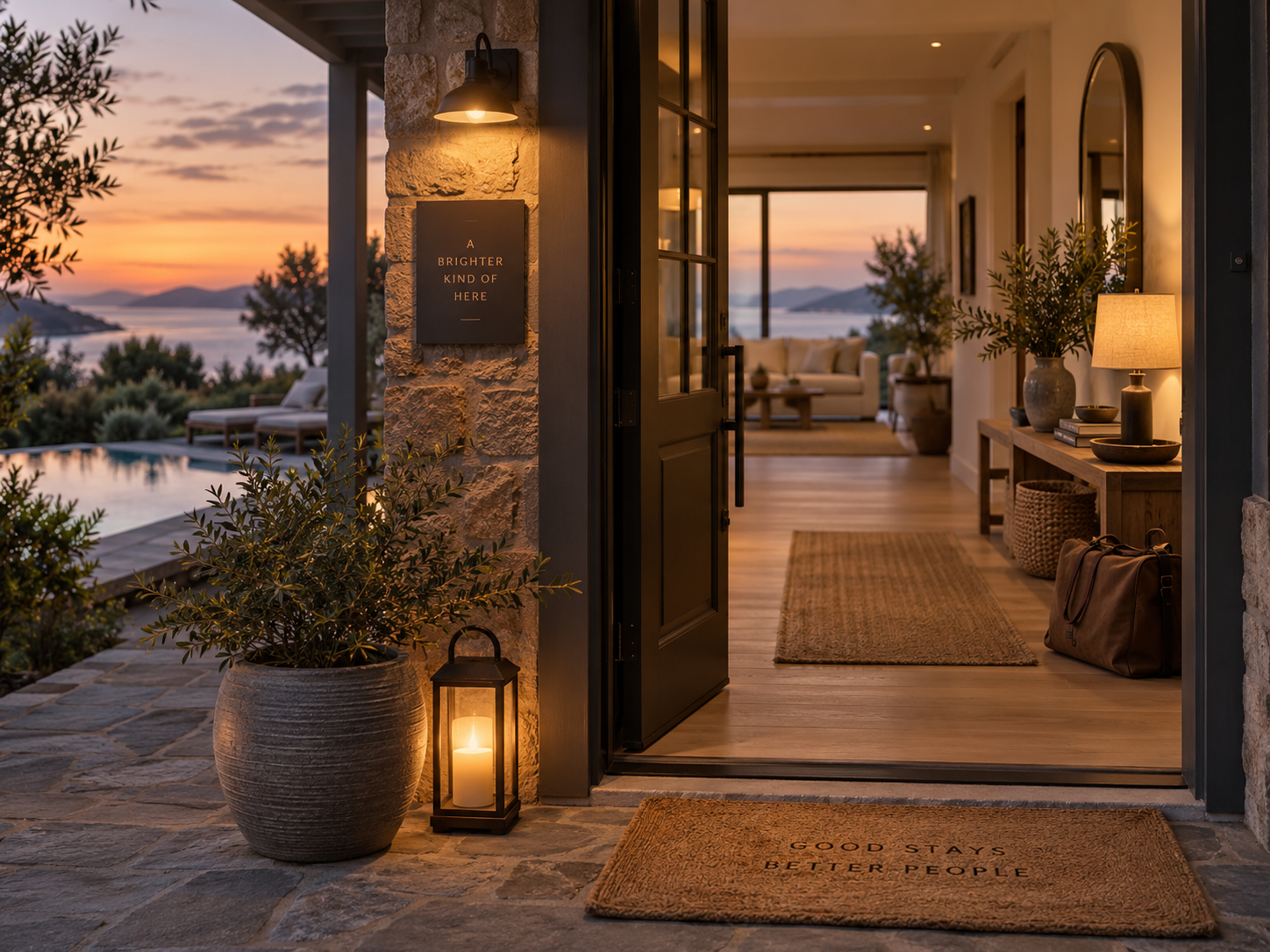
Guests may be arriving tired, hungry, after dark, carrying bags or managing children. At that point, they want the house to be easy to understand. Clear parking instructions, an obvious entrance, good exterior lighting and a lock that works the first time matter more than almost anything decorative inside.
A smooth arrival rarely becomes the thing a guest talks about afterward—and that’s exactly the point. The best check-in experience feels almost uneventful. Everything simply works.
They Notice Cleanliness More Than Styling
Guests may not be able to identify the exact design decisions that make a room look good, but they will notice a hair in the bathroom, stained bedding, crumbs in a drawer or cloudy glassware.
Cleanliness establishes trust. Once someone starts questioning it in one area, they often begin looking more closely everywhere else.
If the choice is between another decorative upgrade and making your cleaning process more consistent, the second investment will usually have a much bigger effect on the stay.
They Notice the Bed
Bedrooms photograph beautifully with layers of pillows, textured bedding and a perfectly placed throw. Guests experience them differently.
They care about the mattress, clean sheets, usable pillows, temperature, light control and whether there’s somewhere nearby to charge a phone. Styling creates anticipation, but the most beautiful bedroom in the world becomes irrelevant at 2 a.m. if the mattress is uncomfortable or the curtains don’t block the light.
Design the bedroom for the photograph. Then test it for the night.
They Notice Temperature
Temperature is one of those things nobody talks about when it’s right. When it’s wrong, it can dominate the entire stay.
A bedroom that never cools down, an upstairs floor that gets too warm, a confusing thermostat or a ceiling fan that doesn’t work can make an otherwise beautiful property uncomfortable.
Guests shouldn’t have to constantly adjust themselves to the house. Comfort should feel easy.
They Notice Where Their Things Go
Beautiful rental photography sometimes forgets one very practical reality: guests arrive with stuff.
They bring suitcases, shoes, jackets, toiletry bags, groceries, beach bags, sunglasses and phone chargers. Walk through the property imagining you’ve just arrived for a four-night stay. Where does the suitcase go? Where do wet towels hang? Where does a toiletry bag sit? Where do six pairs of shoes land near the entrance?
A simple luggage bench or a few well-placed hooks may contribute more to the guest experience than another decorative chair ever will.
They Notice Whether There’s Somewhere to Set a Drink
This sounds almost too small to matter—until you start testing it.
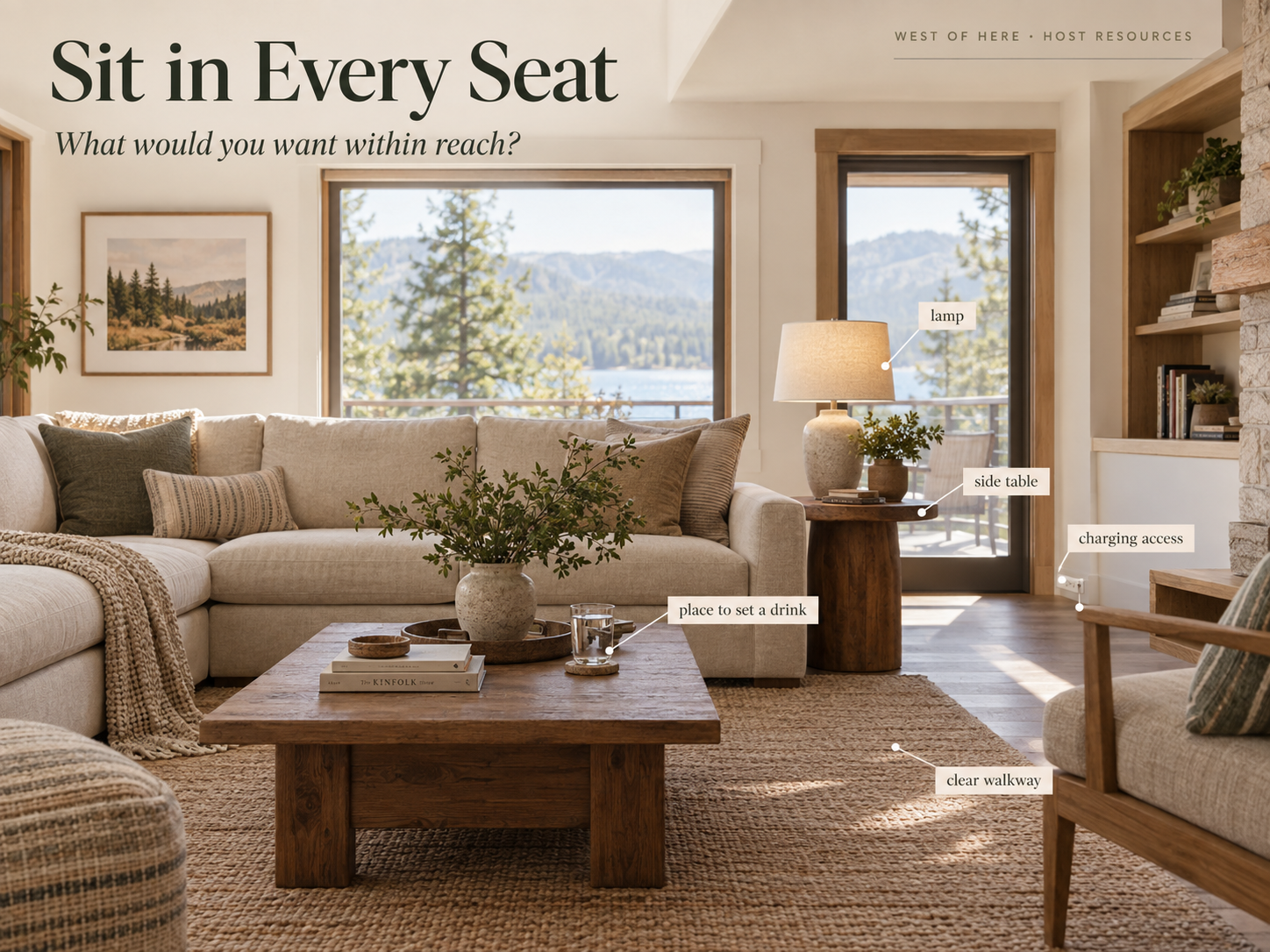
Sit in every seat in the house. The sofa. The reading chair. The porch. The outdoor lounge chairs. The bedside. Then ask yourself what you would want within reach.
A drink, a phone, a book or a pair of glasses shouldn’t need to end up on the floor because the room looked cleaner without a side table.
Function doesn’t have to compromise the design. Often, it makes the room feel more complete.
They Notice Lighting
Guests notice lighting when they can’t see.
A dim bathroom mirror, an outdoor dining table with no useful light after sunset, a bedside lamp controlled from across the room or a staircase that feels dark at night can all create unnecessary friction.
Good lighting is both aesthetic and practical. Rooms generally work better with layers of light rather than one harsh overhead fixture, and in a rental, switches should be easy to understand without instructions.
They Notice the Shower
A bathroom doesn’t need to feel like a spa. It needs to work well.
Reliable hot water, good water pressure, enough towels, useful hooks, somewhere to place toiletries and decent mirror lighting will matter far more to most guests than the brand of the faucet.
A frustrating shower is memorable for all the wrong reasons.
They Notice the Kitchen Basics
You do not need to create a restaurant kitchen. You do need to make normal meals possible. Think about the basics guests are likely to use:
a sharp knife
cutting board
can opener
wine opener
decent pans
enough plates and glasses for the advertised occupancy
coffee
trash bags
dish soap
paper towels
basic food storage
The easiest way to find gaps is to cook an ordinary meal in your own rental. You’ll discover missing equipment much faster than you will by checking an inventory spreadsheet.
They Notice Wi-Fi When It Doesn’t Work
Reliable internet has become basic infrastructure for most stays. Guests may be working, streaming, looking up reservations or trying to entertain children.
Make the network information easy to find and test the connection where people will actually use it—not just beside the router. If the signal disappears in the upstairs bedroom, patio or detached guest space, that matters.
Wi-Fi is another feature guests barely think about when it works well and immediately notice when it doesn’t.
They Notice When the House Matches the Listing
Guests arrive with a picture of the property already in their head. Your listing created it.
Good marketing should show a property at its best without creating expectations the actual house can’t meet. Avoid photographs that dramatically exaggerate room size, descriptions that overstate the view or galleries that conveniently hide important layout quirks.
An imperfect house can still be a wonderful stay. A house that feels noticeably different from the one someone thought they booked is much harder to recover from.
They Notice What Makes the Property Different
Once the basics are working properly, distinctive details start to matter.
A great porch. An outdoor shower. The view from the breakfast table. A record player. Beautiful local photography. An unexpectedly good game cabinet. A thoughtful setup for kids.
These details don’t necessarily need to be expensive. What matters is that they give the guest something specific to remember.
Often, the strongest features are the ones that make someone think, I loved that about the house.
They Notice a Sense of Place
A rental shouldn’t feel as though the exact same interior could have been dropped into ten different destinations.
That doesn’t mean turning the property into a theme. A coastal house doesn’t need seashell signs, and a mountain cabin doesn’t need bears on every surface.
Materials, artwork, color and atmosphere can establish location much more naturally. Linen, weathered wood, woven fibers and photography of the surrounding landscape can make a coastal home feel connected to where it is without ever becoming “beach décor.”
Guests may never consciously identify why the house feels right for the destination. They’ll still feel it.
What Guests Often Don't Notice
This is where hosts can save themselves a surprising amount of work.
Most guests will not know:
whether the nightstand cost $150 or $800
whether every wood finish perfectly matches
whether the decorative pillows follow the latest trend
whether the faucet is from a premium design brand
whether every shelf has been professionally styled
whether the room contains five decorative objects instead of three
They notice the overall effect. They notice whether it feels comfortable, intentional and cared for. They rarely audit the individual ingredients. That means you can stop trying to make every object special. Let the room be special.
They Don't Need More Decorative Pillows
Decorative pillows are perhaps the perfect example. They look great in listing photography. Then guests remove them. Cleaners replace them. Guests remove them again.
A few are useful for adding color and texture. Seven pillows on every bed are usually just another housekeeping task.
If you're deciding where to simplify, start with things guests repeatedly have to move in order to use the room.
They Don't Need Every Surface Styled
Empty space is useful. It gives guests somewhere to put their things.
A beautifully styled console covered in books, candles, bowls and sculptural objects may photograph well—but once someone arrives with keys, sunglasses, a handbag and three shopping bags, that surface has stopped serving them. In a rental, some negative space should be intentional. You're leaving room for the guest.
They Don't Need Luxury Everywhere
One great feature often has more impact than premium finishes spread thinly across an entire property.
Maybe it's an exceptional mattress.
Oversized artwork.
A beautiful dining table.
A great outdoor seating area.
An excellent shower
Spend where the guest is likely to experience the difference. Save where they aren't.
The Best Details Remove Friction or Create a Memory
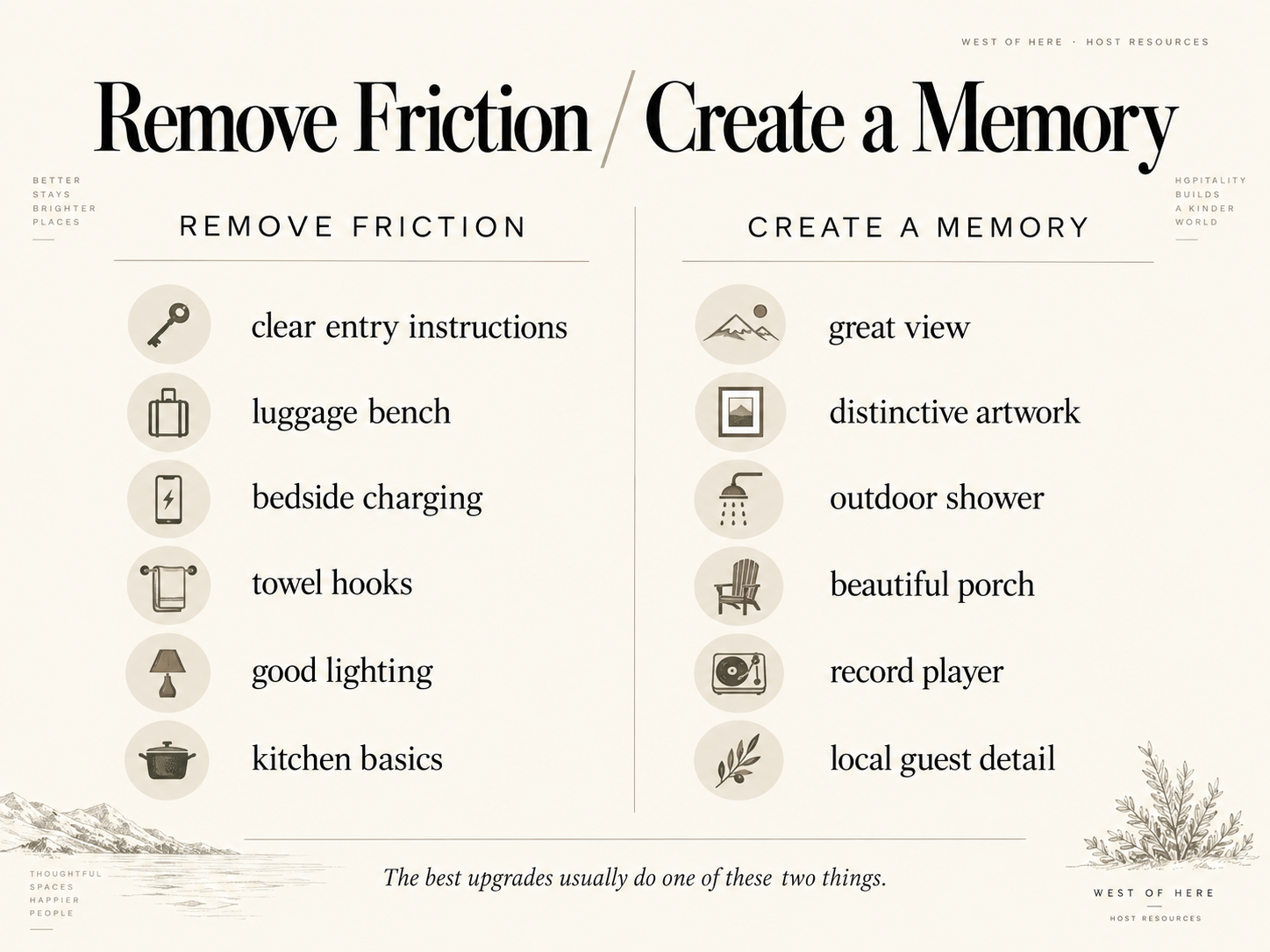
When considering an upgrade, ask two questions:
Does this make the stay easier?
or
Does this make the stay more memorable?
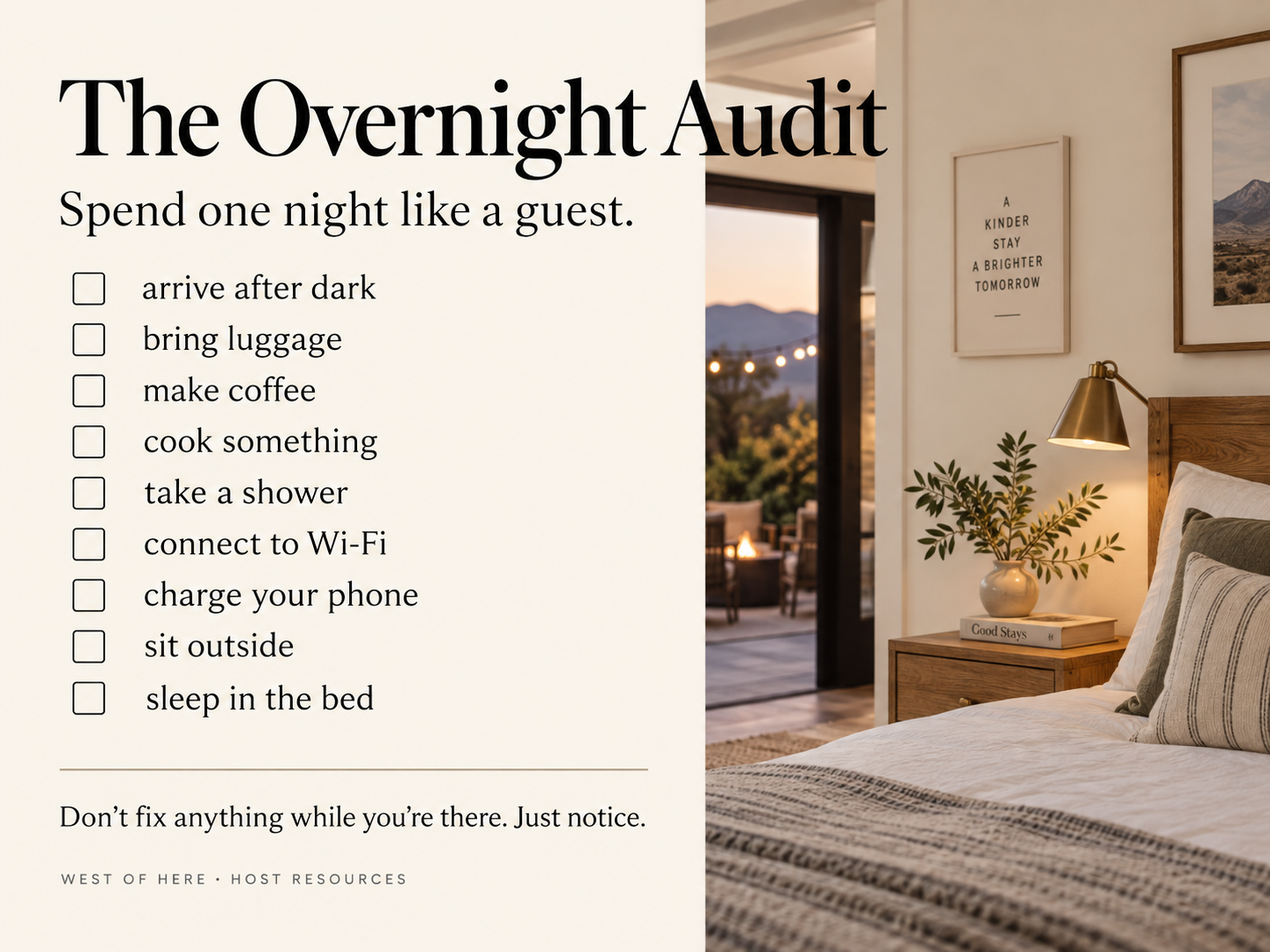
A Simple Way to Audit Your Property
Spend one night in the rental as though you were a guest. Don't fix anything while you're there. The small inconveniences become obvious surprisingly quickly.
Write them down.
Those are usually more valuable than another afternoon spent browsing décor.
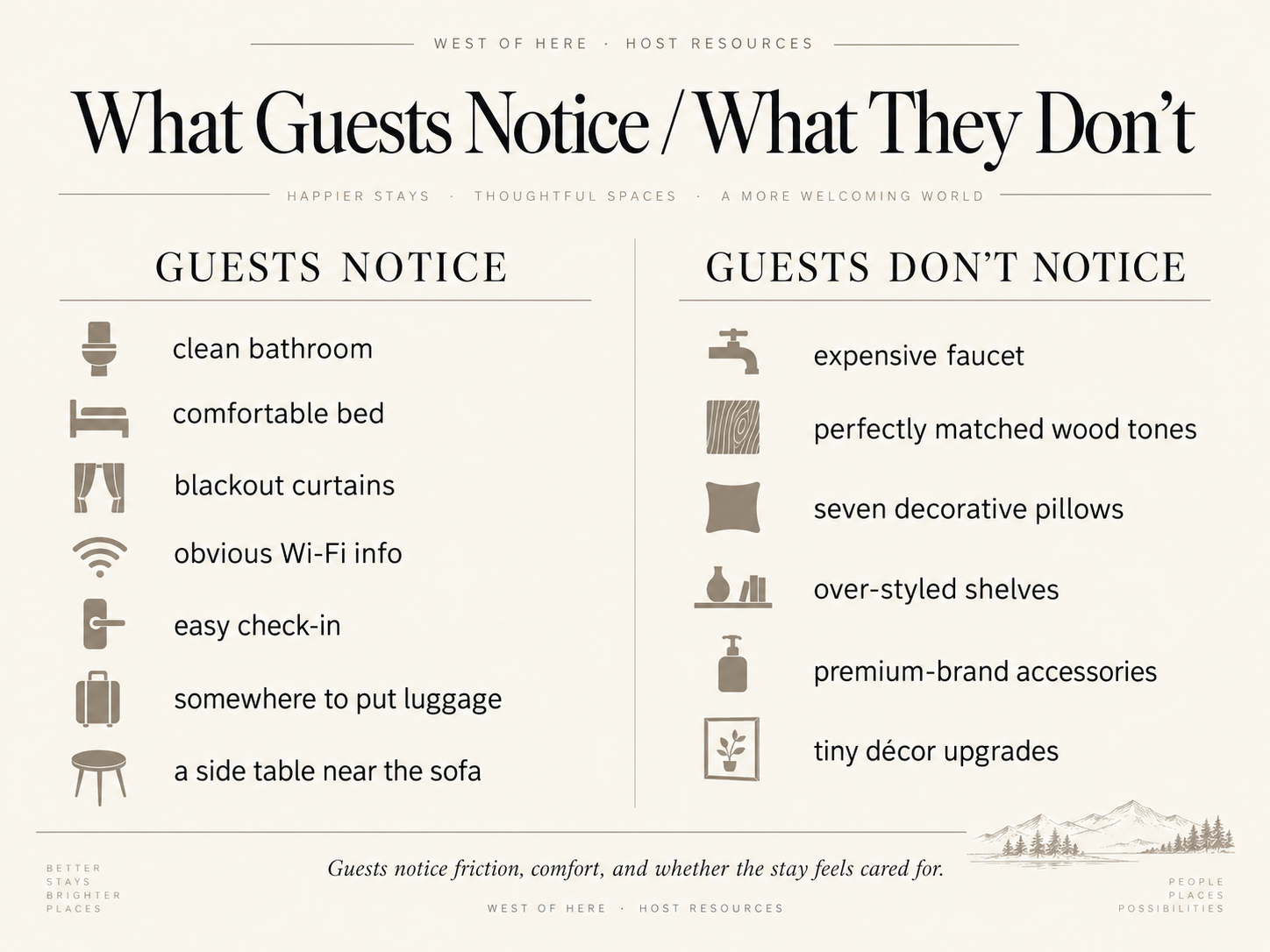
The Takeaway
Guests don't experience a rental as a collection of design decisions. They experience how it feels to be there.
They notice when things are difficult.
They notice when they're uncomfortable.
They notice when something exceeds their expectations.
And they notice the details that give a house personality.
Get the fundamentals right first.
Then use design to create the moments they'll remember. That is usually a better investment than simply adding more.