The Essentials Every Well-Stocked Rental Needs
A room-by-room checklist so you never forget the little things.
Guests rarely remember that a vacation rental had exactly twelve dinner plates.
They do remember discovering there was no corkscrew.
Or getting into the shower and realizing there was nowhere to put their shampoo. Or making coffee in the morning only to find filters were missing. Or climbing into bed and realizing there wasn’t an outlet anywhere near it.
A well-stocked rental isn’t about filling every cabinet.
It’s about anticipating the ordinary moments of a stay well enough that guests rarely have to stop and think about what’s missing.
The best test is simple:
Could someone arrive with a suitcase and comfortably live here for a few days?
Here’s where to start.
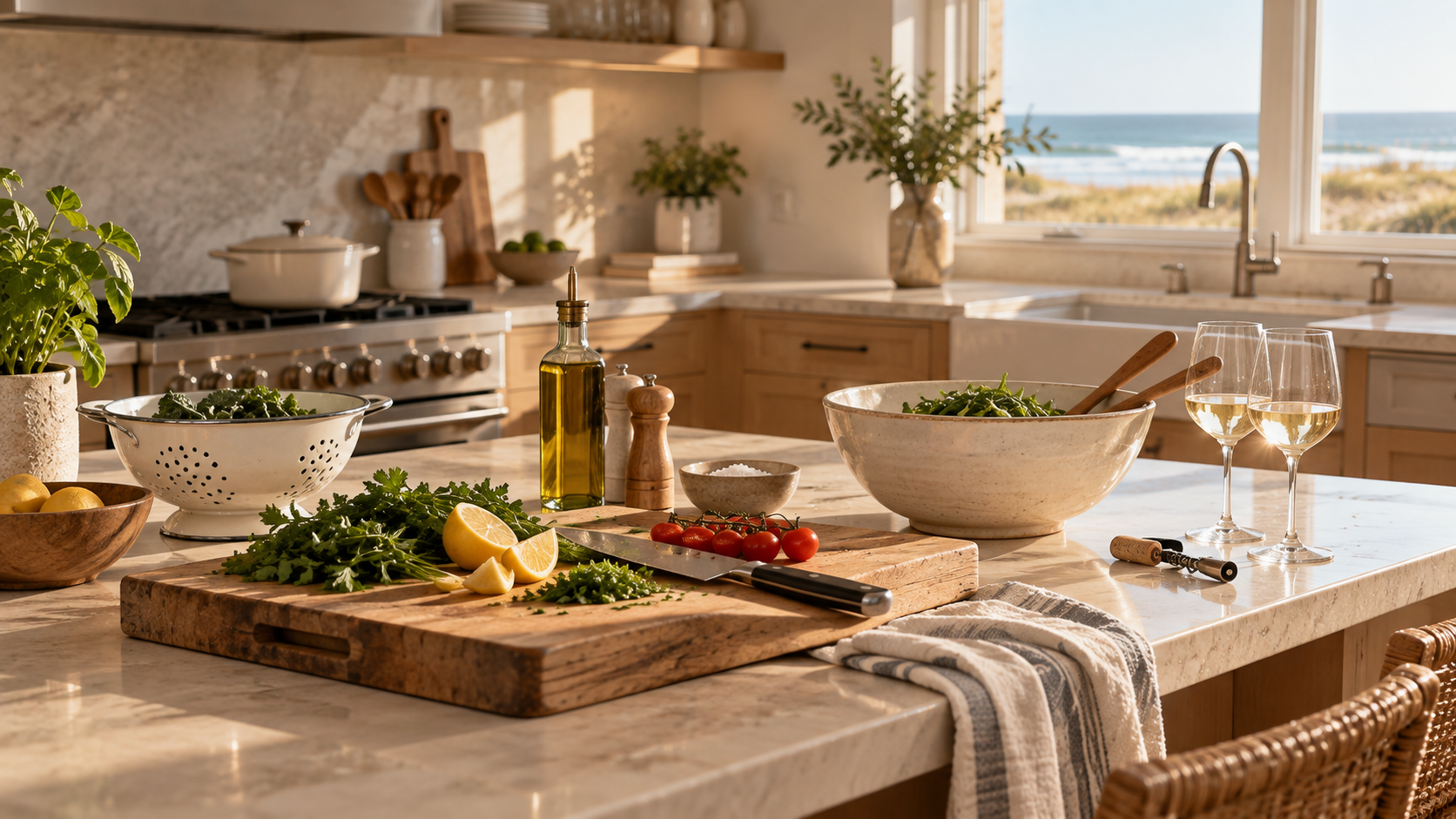
The Kitchen: Stock for Actual Cooking
Vacation-rental kitchens have an unusual job.
They need to work for the guest who only reheats takeout and the family who decides to cook dinner for eight.
You don’t need every specialty appliance imaginable. You do need the basics to work together.
Start with enough plates, bowls, glasses, mugs and flatware for the maximum number of guests — plus a little breathing room. Nobody wants to run the dishwasher after every meal because a six-person house contains exactly six forks.
Then think through an actual dinner.
Can guests chop vegetables? Open a bottle of wine? Drain pasta? Serve a salad? Store leftovers?
That exercise usually reveals the things that get forgotten.
And don’t underestimate coffee.
Guests may forgive a missing roasting pan.
Coffee at 7 a.m. is another matter.
Keep the setup obvious, stocked and easy to use, with whatever filters, pods or supplies your machine requires.
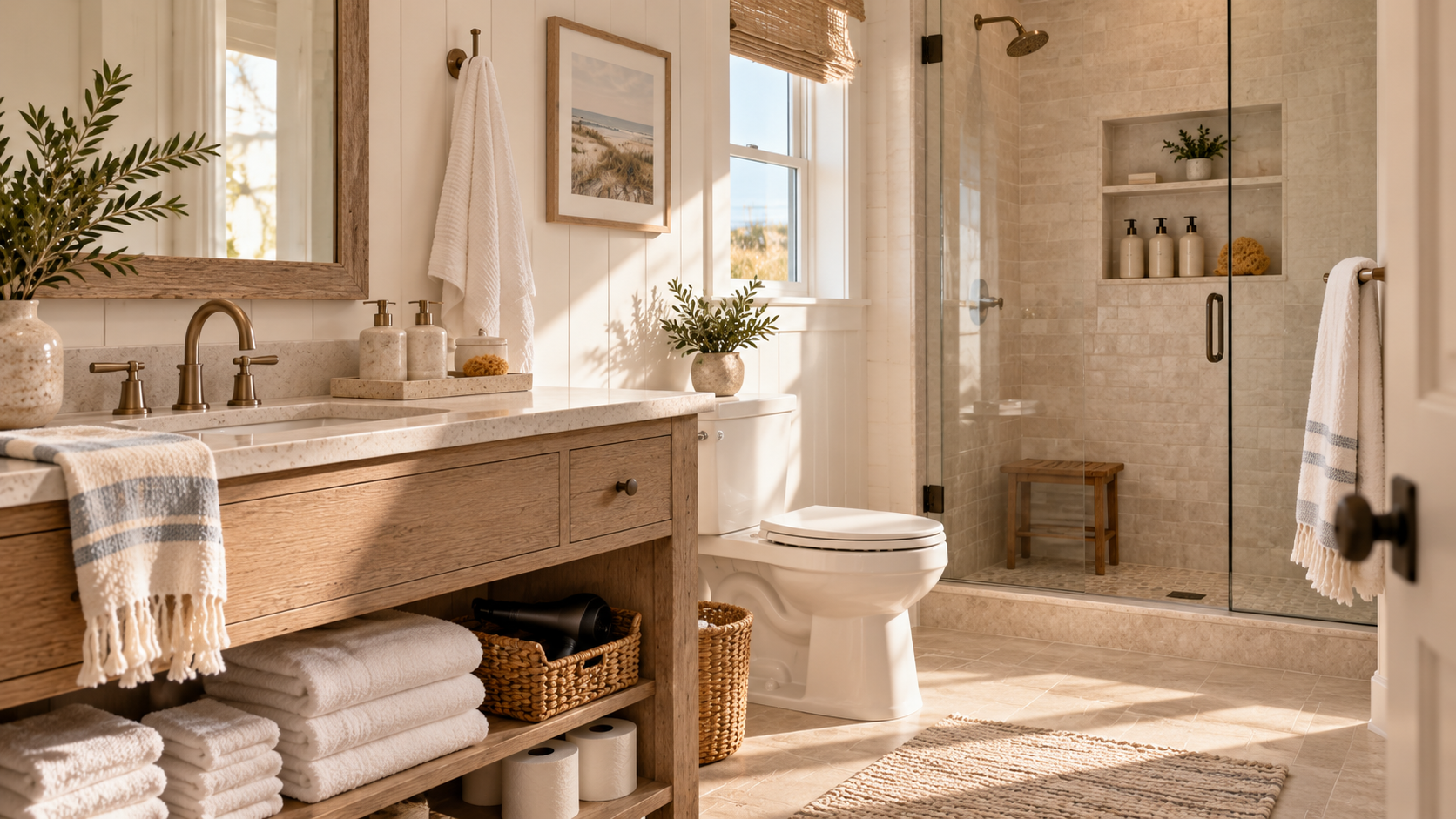
The Bathroom: Think Beyond Towels
A freshly cleaned bathroom can still feel strangely unfinished.
Guests need somewhere to put things.
That means towel hooks or bars, counter space, somewhere inside the shower for toiletries and a place to hang a wet bathing suit when you’re hosting near the water.
Provide enough bath towels and washcloths for your occupancy, along with hand towels at each sink.
Then stock the things people commonly assume will be there: hand soap, toilet paper, basic toiletries and a hair dryer.
A few backups should be easy to find.
There’s a difference between making guests hunt through an owner’s closet and letting them open one clearly designated cabinet when the toilet-paper roll runs out.
Presentation matters here, too.
Matching dispensers, neatly folded towels and a small tray can make completely ordinary supplies feel much more considered.

The Bedroom: Make Sleeping Easy
Most bedrooms don’t need more decorating.
They need better functionality.
Each sleeping position should have reasonable access to a light, somewhere to place a phone and ideally an outlet or charging option nearby.
Give guests somewhere to put clothes, even if it’s simply a luggage rack, hooks and a few empty hangers.
Then think about temperature and light.
Extra blankets should be easy to find. Window coverings should actually provide privacy. If morning sun pours directly into the room, guests shouldn’t discover at 6:12 a.m. that the decorative linen curtain is entirely transparent.
A bedroom earns its keep at night.
Design it accordingly.
The Living Room: Look for the Friction Points
This is usually where guests spend the most unstructured time.
Sit in every seat.
Where would you put a drink?
Can you reach a lamp?
Does everyone have somewhere comfortable to sit if the house is full?
Can guests figure out the television without a twenty-minute investigation?
If the remote is unusual, leave brief instructions nearby or include them in the House Book.
This is also a good place for the things guests naturally reach for during downtime: a deck of cards, a game, a puzzle or a few books connected to the destination.
They don’t need an entertainment center.
They need the room to work.
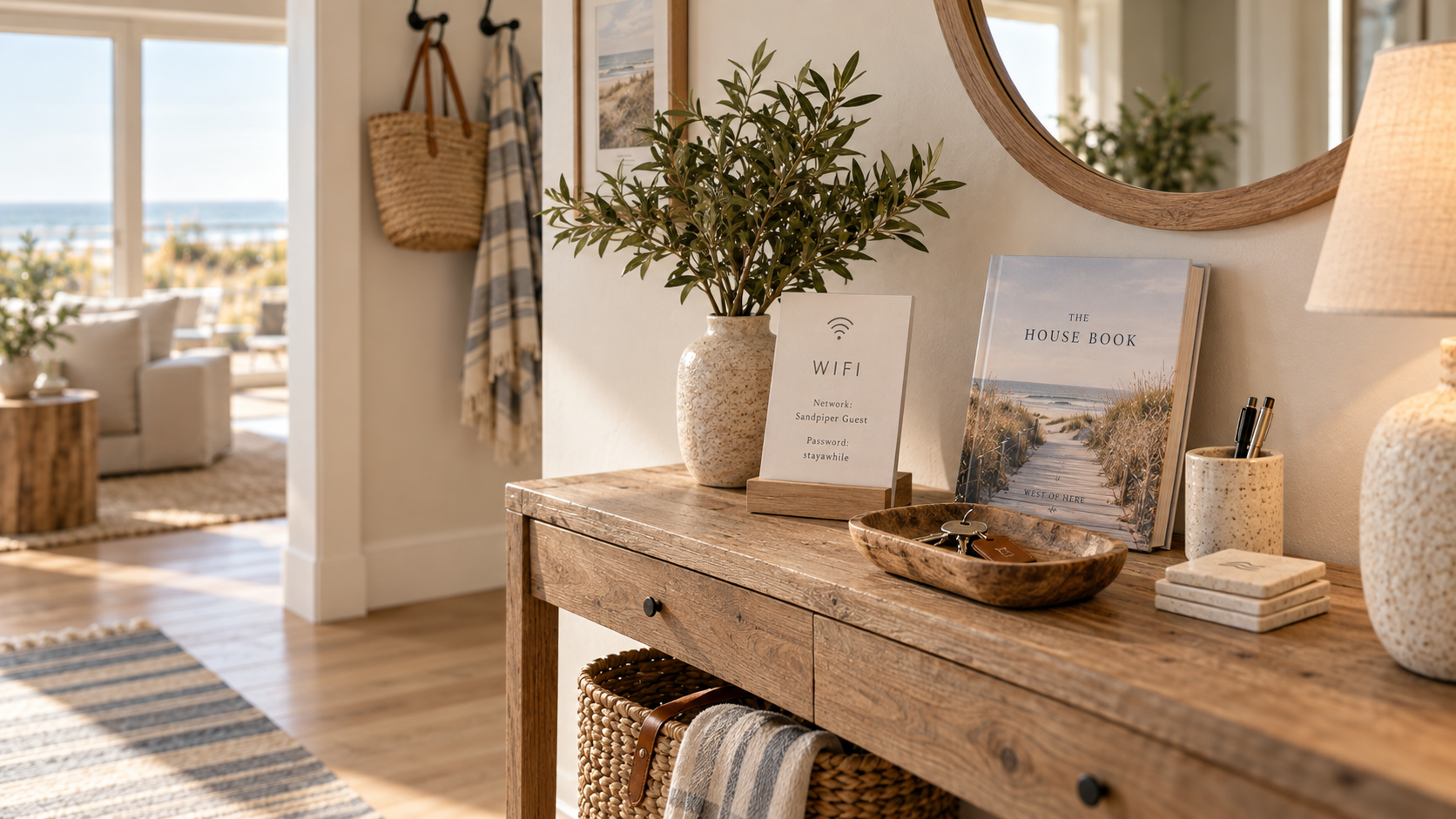
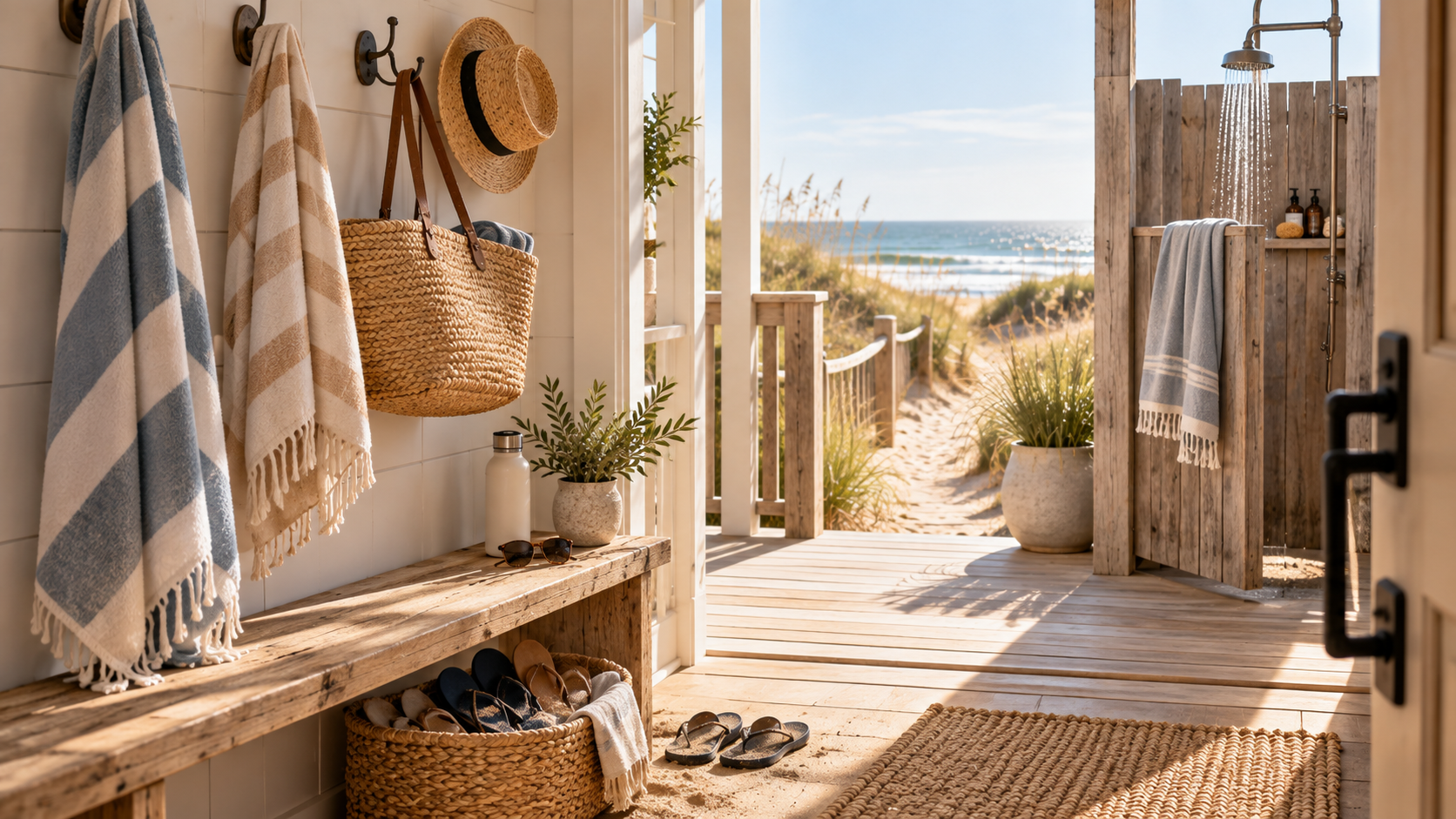
The Entry: Give Everything a Landing Place
Arrivals involve stuff.
Suitcases. Shoes. Keys. Sunglasses. Beach bags. Dog leashes. Jackets.
If there isn’t an obvious place for those things, guests will create one — usually on your dining table or kitchen counter.
A bench, hooks, basket or small console can immediately make an entry more useful.
This is also an ideal place for the information guests need right away.
A simple WiFi display and clearly located house information eliminate two of the easiest questions to prevent.
The Things Guests Need but You Hope They Never Do
Some of the most important supplies in a vacation rental are the least glamorous.
A plunger
A flashlight
Extra batteries
A basic first-aid kit
A fire extinguisher
A broom
Paper towels
Trash bags
These aren’t the details that make listing photos beautiful.
They’re the details that save a guest from having to message you at 10:30 p.m.
Store them somewhere logical and tell guests where they are.
Useful beats hidden.
Stock for the Destination
A well-stocked property should respond to where it is.
At a beach house, guests may need beach towels, somewhere to rinse sand, hooks for wet suits and a place to drop beach gear.
At a mountain property, blankets, boot storage and fireplace supplies may matter more.
A lake house might benefit from outdoor towels, life-jacket storage and somewhere for damp gear.
This is where stocking stops being generic hospitality and starts becoming part of the stay.
If guests repeatedly need something because of your location, it probably belongs in the house.
Think About the People You Actually Host
Not every rental needs the same extras.
If you regularly host families, kid-friendly cups, a step stool, games or a destination-inspired activity book may get far more use than another decorative accessory.
If your property primarily hosts couples, good glassware, two comfortable robes or a simple coffee setup for slow mornings may make more sense.
Pet-friendly homes have another set of needs.
So do properties built around pools, hot tubs, skiing, fishing or long beach days.
You don’t need to anticipate every possible guest.
You do want to anticipate your guest.
That distinction keeps a property useful without letting it become overcrowded.
Keep Backups Without Creating Clutter
Well-stocked does not mean visibly stocked.
Guests shouldn’t walk into a kitchen that looks like a warehouse or a bathroom lined with Costco packages.
Keep the active supply simple and accessible, then organize backups in clearly defined cabinets or closets.
For consumables, establish a minimum amount that should remain after every turnover.
That takes the decision-making out of restocking.
Instead of wondering whether there’s “probably enough” coffee or toilet paper, your cleaner or property manager knows exactly what full means.
Consistency becomes much easier when the standard is defined.
Do the “Did I Forget Something” Test
There’s an easy way to find holes in your setup.
Imagine arriving at your rental after dark with nothing except the clothes in your suitcase.
You’re tired
You want to use the bathroom, charge your phone, drink a glass of water, take a shower, make something simple to eat and go to bed
Then tomorrow morning you want coffee
Walk through those moments physically
Open the drawers
Turn on the lamps
Plug in your phone
Run the coffee maker
Every time you have to improvise, search or think: That’s something worth fixing.
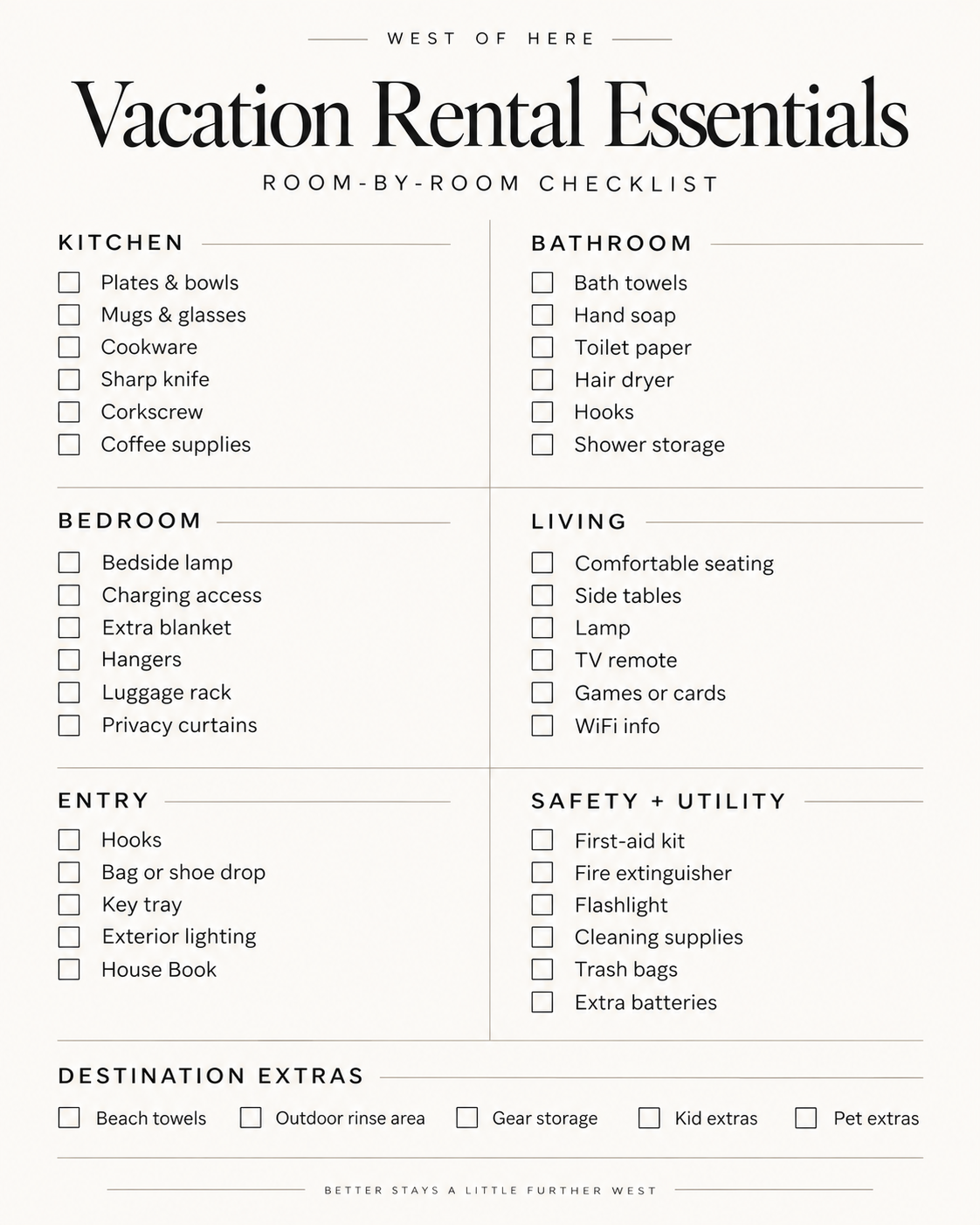
Well-Stocked Should Feel Invisible
The irony of stocking a rental well is that guests may never consciously notice most of it.
That’s the goal.
They reach for a wine opener and it’s there.
There’s a hook exactly where they need one.
The extra blanket is easy to find.
The WiFi password doesn’t require a message.
A well-stocked house doesn’t announce how prepared it is. It simply works.
And when all of those ordinary details have been considered, guests are free to pay attention to the reason they came in the first place: the stay itself.